how high does uv index go
A UV Index reading 6 or 7 puts you at a high risk of harm from unprotected sun exposure. Use sunscreen of at least SPF-30.

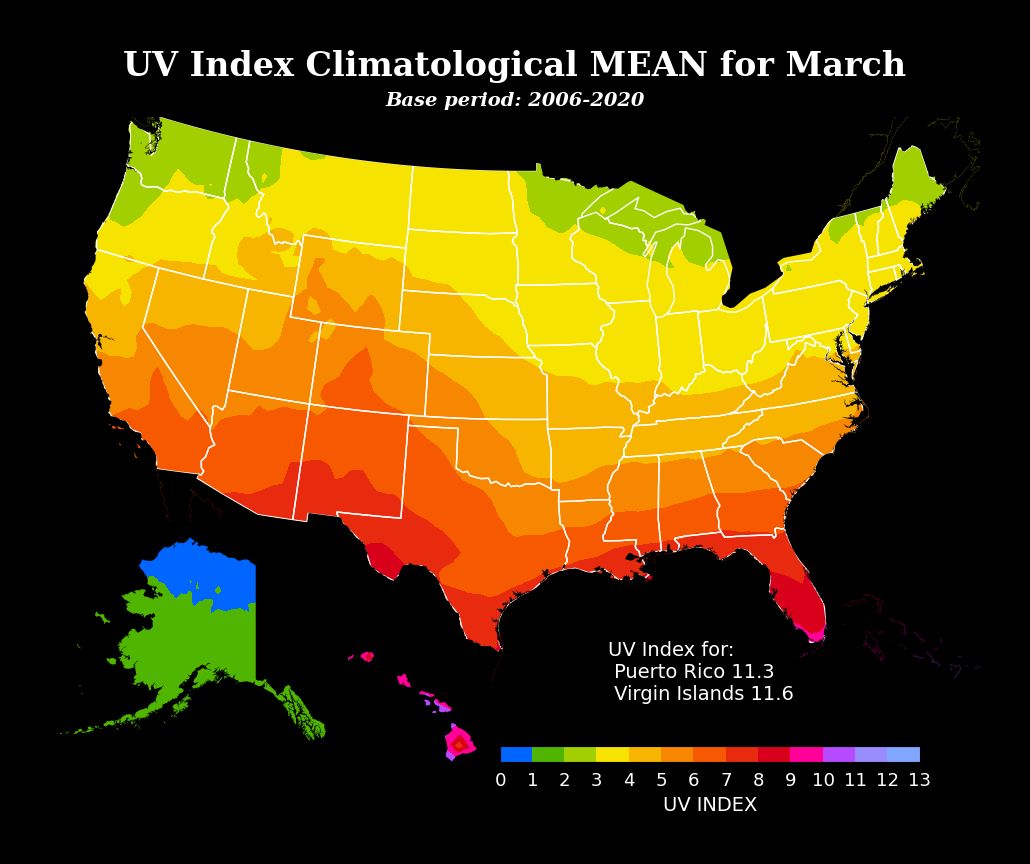
Sun Safety Monthly Average Uv Index Us Epa
And because snow reflects the suns rays the UV index on a sunny day at a ski area can be as high asor higher thanit is at the beach especially when.
. Low 1-2 moderate 3-5 high 6-7 very high 8-10 extreme 11 and above. Factors such as latitude ozone cloud. This is usually between 1130 and 1230 or 1230 and 130 in locations where daylight saving is being observed. Following the steps from the moderate level is suggested.
When the UV index is presented on a daily basis it represents UV intensity around the suns highest point in the day called solar noon halfway between sunrise and sunsetThis typically occurs between 1130 and 1230 or between 1230 and 1330 in areas where daylight saving time is being observed. Wear a wide-brimmed hat sunglasses and a long. A UV Index reading 6 or 7 puts you at a high risk of harm from unprotected sun exposure. UV radiation is strongest at the equator and goes down as you move towards the north or south poles.
The UV Index divides UV radiation levels into. Following the steps from the moderate level is suggested. The index has nothing to do with temperature so that means it could be freezing outside and the UV Index could be on the. The maps below show monthly average UV Index values for the United States.
To read more about the ranges on the UV index go to the United States Environmental Protection Agency website. It tells you the times during the day that you need to be SunSmart. Taking these factors into account the UV Index predicts the level of solar UV radiation and indicates the risk of overexposure on a scale from 0 low to 11 or more extremely high. Stay in shade near midday when the sun is strongest.
The index was originally created by Canadian scientists in the early 1990s and has since been adapted for use throughout the world. High A UV Index reading of 6 to 7 means high risk of harm from unprotected sun exposure. The ultraviolet UV index is a scale that represents the intensity of UV radiation produced by the sun. It goes down in the fall and is the lowest in the winter.
Make sure it is broad spectrum and water resistant. Check UV Forecast for Holiday Destinations and Read About UVA and UVB. The UV Index is a tool you can use to protect yourself from UV radiation. Apply SPF 30 sunscreen every 2 hours.
All the forecast parameters used in the UV Index computation are derived from NWS forecast models. Generously apply broad spectrum SPF 30 sunscreen every 2. Protection against skin and eye damage is needed. Protection against significant skin and eye damage is essential.
The daily UV index forecast is a prediction of the maximum UV strength for the day which is usually reached in the early afternoon. The time to burn can vary by skin type but at a high UV level it is approximately 15 to 25 minutes. Reduce time in the sun between 10 am. Put it on 20 minutes before you go outdoors and every two hours afterwards.
Reapply sunscreen every few hours during the day it is easily washed off by sweating and. A UV Index forecast begins with a forecast of the total ozone amount. The basic UV Index forecast is given for solar noon the suns highest point in the sky and the time of the highest fluctuation in UV radiation under clear sky conditions. A UV Index of 6-7 High means there is a moderate risk of harm from unprotected sun exposure.
The UV scale measures how high the ultra-violet rays are at any given time. Reduce time in the sun between 10 am. Fair skinned people may burn in less than 20 minutes. If outdoors seek shade and wear protective clothing a wide-brimmed hat and UV-blocking sunglasses.
The time to burn can vary by skin type but at a high UV level it is approximately 15 to 25 minutes. Remember that sunscreen does go off - check the sell by date. The highest UV intensity is reached when the sun is at its highest point in the day halfway between sunrise and sunset called solar noon. Because air at higher altitudes is thinner UV radiation goes up as you go up in altitude.
Reduce time in the sun between 10 am. Protection against sun damage is needed. A UV Index reading of 6 to 7 means high risk of harm from unprotected sun exposure. Learn more about the UV Index.
The UV Index is a simple and informative way of describing the daily danger of solar UV radiation intensity. Cover up use a high SPF sunscreen wear a hat and reduce time in the sun at midday. Up to 12 cash back The UV Index is a numbered scale from 1 low to 11 extremely high that measures the expected risk of overexposure to the suns UV raysand this encompasses both UVB burning and UVA aging rays. The UV index offers a scale which allows you to measure the intensity of the UV rays.
UV rays can cause skin cancer and cataracts if youre not fully protected. Predictions are made by a computer model that accounts for the effects of. The UV Index is highest in spring and summer. Ultra-violet rays is the damaging rays coming from the sun.
A special UV Alert may be issued for a particular area if the UV Index is forecasted to be higher than normal. A UV Index reading 8 to 10 puts you at a very high risk of harm from unprotected sun exposure. Reduce time in the sun between 10 am. Heat or high temperatures are not an indication of UV levels.
If outdoors try to stay in a shaded area. A UV Index reading 8 to 10 puts you at a very high risk of harm from unprotected sun exposure. Seek shade and wear protective clothing a wide-brimmed hat and UV-blocking sunglasses.

Uv Index Description Us Epa

How To Use The Uv Index To Protect Yourself From The Sun S Harmful Rays Accuweather

Uv Index Chart On Gray Background Sponsored Index Uv Chart Background Gray Ad Index Brochure Template Brochure

Sun Safety Monthly Average Uv Index Us Epa

Bfs What Is The Uv Index

Posting Komentar untuk "how high does uv index go"